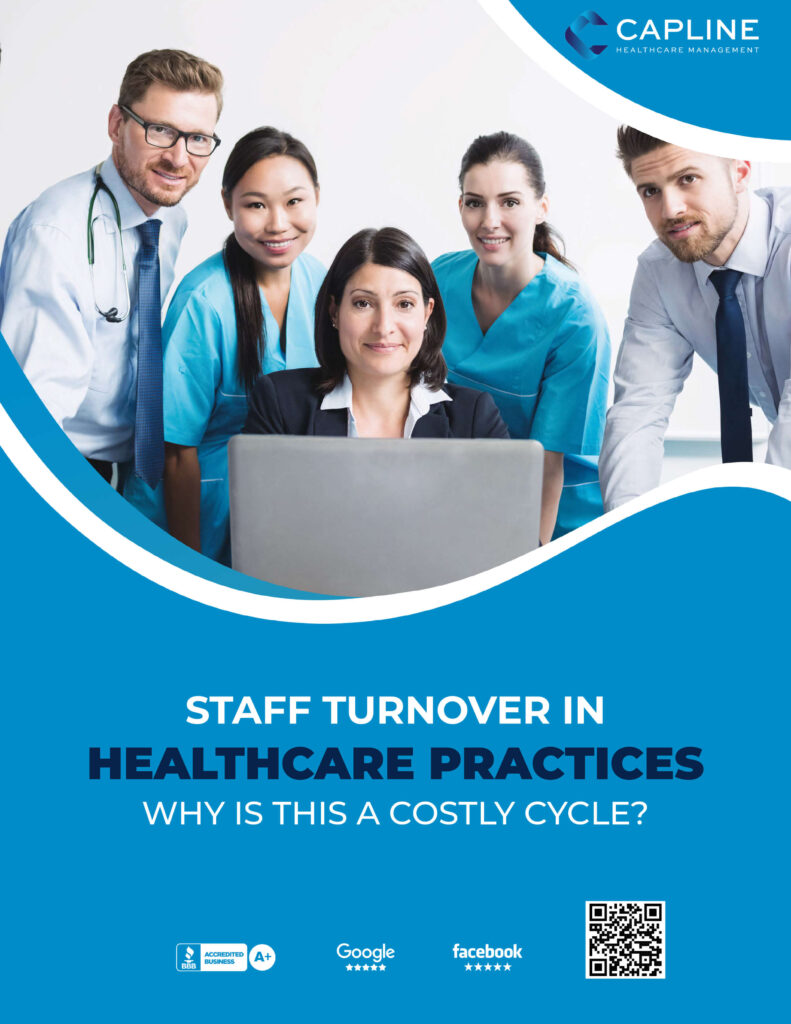
Staff turnover within healthcare settings generates a damaging cycle that damages both service quality and operational productivity while affecting financial stability. Capline Healthcare Management’s whitepaper, “Staff Turnover in Healthcare Practices: Why Is This a Costly Cycle?” A detailed analysis of healthcare fundamentals and effects, along with practical solutions, addresses this persistent healthcare challenge, according to this whitepaper.
The High Cost of Turnover in Healthcare
The United States healthcare industry experiences 20% staff turnover annually, which demonstrates the intensity of the problem. Every physician exit requires organizations to pay three major expenses: recruitment costs, training expenses, and decreased productivity. Turnover produces multiple direct expenses while breaking team unity and eliminating institutional expertise, which negatively impacts healthcare delivery standards. The paper investigates various impacts of employee turnover while exploring its effects, from financial expenses to direct healthcare service provision.
Unpacking the Causes: Why Do Healthcare Workers Leave?
The whitepaper identifies several interrelated factors contributing to high turnover rates:
- Burnout: Professional employees often move to different organizations when their organizations fail to provide defined paths for career advancement.
- Limited Career Advancement: To create efficient solutions for healthcare professionals' unique requirements and worries, we need to identify their fundamental reasons for dissatisfaction.
- Inadequate Compensation: Staff typically consider themselves undervalued when their wages fail to match the work requirements.
- Challenging Work Environments: The combination of bad leadership, insufficient funding, and toxic work environments leads to employee dissatisfaction.
- Work-Life Imbalance: The combination of strict scheduling and inadequate personal support infrastructure leads healthcare institutions to lose their workforce.
Healthcare organizations develop targeted interventions by analyzing root causes that healthcare professionals need.
The Ripple Effects: Consequences of High Turnover
High turnover doesn't just affect staffing levels; it has far-reaching implications:
- Financial Strain: The process of finding and preparing new employees costs valuable financial resources, which depletes money that should be allocated elsewhere.
- Operational Disruptions: The frequent change in healthcare personnel leads to inconsistent patient care and administrative operational processes.
- Decreased Patient Satisfaction: Patients value continuity with their care providers. When patient care providers change frequently, patients lose trust and satisfaction while requiring continued care from unfamiliar healthcare professionals.
- Lower Staff Morale: The additional stress created by heavier workloads that employee survivors must handle increases their likelihood of resigning, creating a self-perpetuating negative cycle in the organization.
The whitepaper demonstrates how each consequence connects to the others, causing their effects to strengthen and multiply the total impact on healthcare organizations.
Breaking the Cycle: Strategies
To mitigate the adverse effects of turnover, the whitepaper proposes several evidence-based strategies:
- Enhance Employee Engagement: Healthcare organizations must create platforms that recognize workers while providing support through open communication channels to build staff dedication and morale.
- Invest in Professional Development: Organizations should create development pathways to keep their motivated workers from leaving.
- Offer Competitive Compensation: The whitepaper outlines that department heads and supervisors need training, which includes emotional intelligence development with communication abilities and team management capabilities.
- Improve Work-Life Balance: Business organizations need to establish flexible work schedules and workplace support systems that enable their personnel to maintain their business responsibilities alongside their personal duties.
- Strengthen Leadership: Frontline managers stand as essential figures who drive employee retention at their organizations. Supervisors must receive training that develops their emotional intelligence, communication skills, and team management skills, according to the whitepaper.
- Leverage Technology for Efficiency: Modern practice management systems, together with workflow automation, help staff reduce their workload while increasing their patient interaction time.
Healthcare leaders who wish to address the challenge will find valuable information and functional solutions in this white paper.
Conclusion
The healthcare industry operates with a multi-layered staff retention problem that directly impacts patient outcomes and employee welfare, together with organizational success. This whitepaper from Capline Healthcare Management conducts an extensive investigation of employee turnover and its effects through real-life retention strategies. Healthcare leaders who want to understand and fix this issue will find helpful information and practical instruments throughout the document.
To delve deeper into the intricacies of healthcare staff turnover and explore comprehensive solutions, download the full whitepaper here: Staff Turnover in Healthcare Practices: Why Is This a Costly Cycle?