A medical practice depends successfully on revenue cycle management to maintain financial stability and sustainability. Medical coding functions as the core activity within the revenue cycle. As professionals convert patient healthcare events, diagnoses, and procedures into standardized alphanumeric numbers. Precise medical coding provides both appropriate financial reimbursement and steady cash flow, which drives practice expansion and enables superior assessment and treatment of patients.
The paths to maintaining accurate coding throughout entire processes prove challenging to accomplish, although the concept appears simple. Medical coding complexity, alongside updating coding systems and daily patient data complexity, produces conditions where coding errors become more likely. Small coding mistakes result in multiple serious financial and legal consequences through denied claims, which lead to revenue decreases along with increased audit probabilities and heightened risk for legal consequences.
The paper provides healthcare organizations with a detailed medical coding framework that shows how to enhance their coding procedures to protect against risks and strengthen their revenue generation system. Medical coding serves as a vital operational method that delivers stability for long-term financial performance, along with operational efficiency.
This white paper analyzes precisely how medical coding accuracy serves multiple purposes by affecting patient treatment while satisfying both legal requirements and administrative payments. Medical information transformed through standard coding procedures creates an accurate coding system that upholds patient data integrity, thus supporting healthcare payment compliance and generating successful claim approvals.
The document provides insight into the various problems that typically occur within medical coding systems. Accurate medical coding depends on maximum specification because it ensures the exact conversion of every important aspect of medical records into the right coding system. The absence of provider-coder communication, combined with poor documentation and the nonuse of updated coding sets, is a major factor that produces coding errors. Such oversights result in claims rejections, denials, and underpaid benefits, with additional administrative work.
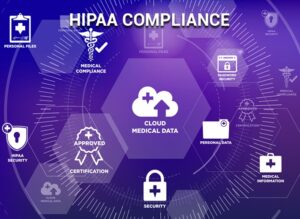
The white paper establishes effective guidance to assist healthcare providers in optimizing their medical coding practices. The document emphasizes the vital importance of maintaining coding compliance as its main essential point. The healthcare industry's transformation into value-based care requires heightened compliance with coding regulations for organizations to maintain financial strength and prevent audits, as well as financial penalties.
The white paper stresses the value of proper diagnosis (ICD-10) and procedure (CPT) code selection because it determines reimbursement accuracy. The correct use of modifiers remains crucial since they supply essential context to coding situations to reduce billing mistakes and deny claims.
The management of Claim Correction Management (CCM) denials stands as a critical approach, according to the whitepaper discussion. A proactive method to identify denial causes must be implemented alongside corrective measures that stop new incidents from happening, according to the whitepaper.
The white paper emphasizes that providers should maintain an open dialogue with coders to enhance their work relationships. Open communication between providers and coders helps to resolve medical documentation ambiguities, which leads to correct code assignment. The practice of continuous training for coding staff requires substantial investment to maintain their knowledge of current coding guidelines.
Are You Prepared For Change?
The whitepaper demonstrates how to empower practices by explaining medical coding accuracy while presenting avoidable coding mistakes and useful process improvement strategies. You can access the complete whitepaper to better understand critical insights while implementing solutions that protect your revenue stream and maintain compliance standards for long-term practice success.
To start along the path to a more effective future, download the white paper right now.